What is Answer Engine Optimization and why does it matter for B2B companies?

What is Answer Engine Optimization and why does it matter for B2B companies?

Written by
Krishna Kaanth
Reviewed by
Krishna Kaanth
Last Update
February 14, 2026
In this article

🔑 The Responsibility Has Shifted

But here's what's fundamentally different now: AI is telling users "this is the answer."

That single shift changes everything. The responsibility for AI to be right is astronomically higher than what Google ever faced. And because of this responsibility, AI engines are desperately searching for something specific - sources they can trust.

This is the foundation of everything I'm about to share with you about Answer Engine Optimization. It's not about gaming another algorithm. It's about becoming the trusted voice that AI confidently references when a buyer asks the questions that matter to your business.

The Shift That Changes Everything [toc=The Paradigm Shift]

I recently came across a statistic that stopped me cold: human-generated content on the internet is now less than AI-generated content. Let that sink in for a moment.

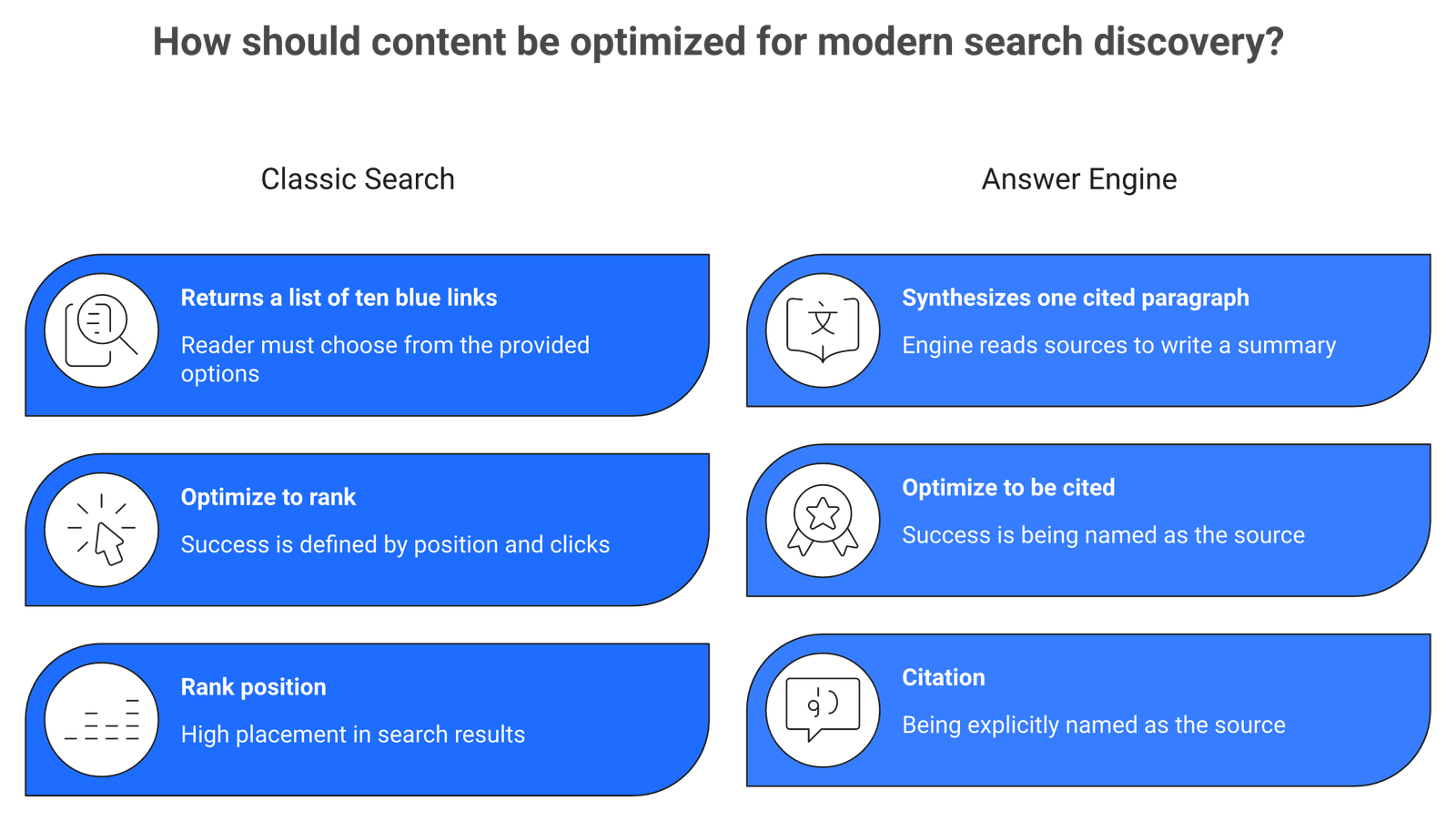
We're living through what I genuinely believe is the biggest paradigm shift in how buyers discover solutions since Google itself emerged. For years, we operated in a world where someone searched on Google, saw ten blue links, clicked through each article, and decided for themselves which answer was right for them. The search engine's job was to present options. The user's job was to evaluate.

🔑 The Responsibility Has Shifted

But here's what's fundamentally different now: AI is telling users "this is the answer."

That single shift changes everything. The responsibility for AI to be right is astronomically higher than what Google ever faced. And because of this responsibility, AI engines are desperately searching for something specific - sources they can trust.

This is the foundation of everything I'm about to share with you about Answer Engine Optimization. It's not about gaming another algorithm. It's about becoming the trusted voice that AI confidently references when a buyer asks the questions that matter to your business.

What is Answer Engine Optimization (AEO)? [toc=AEO Definition]

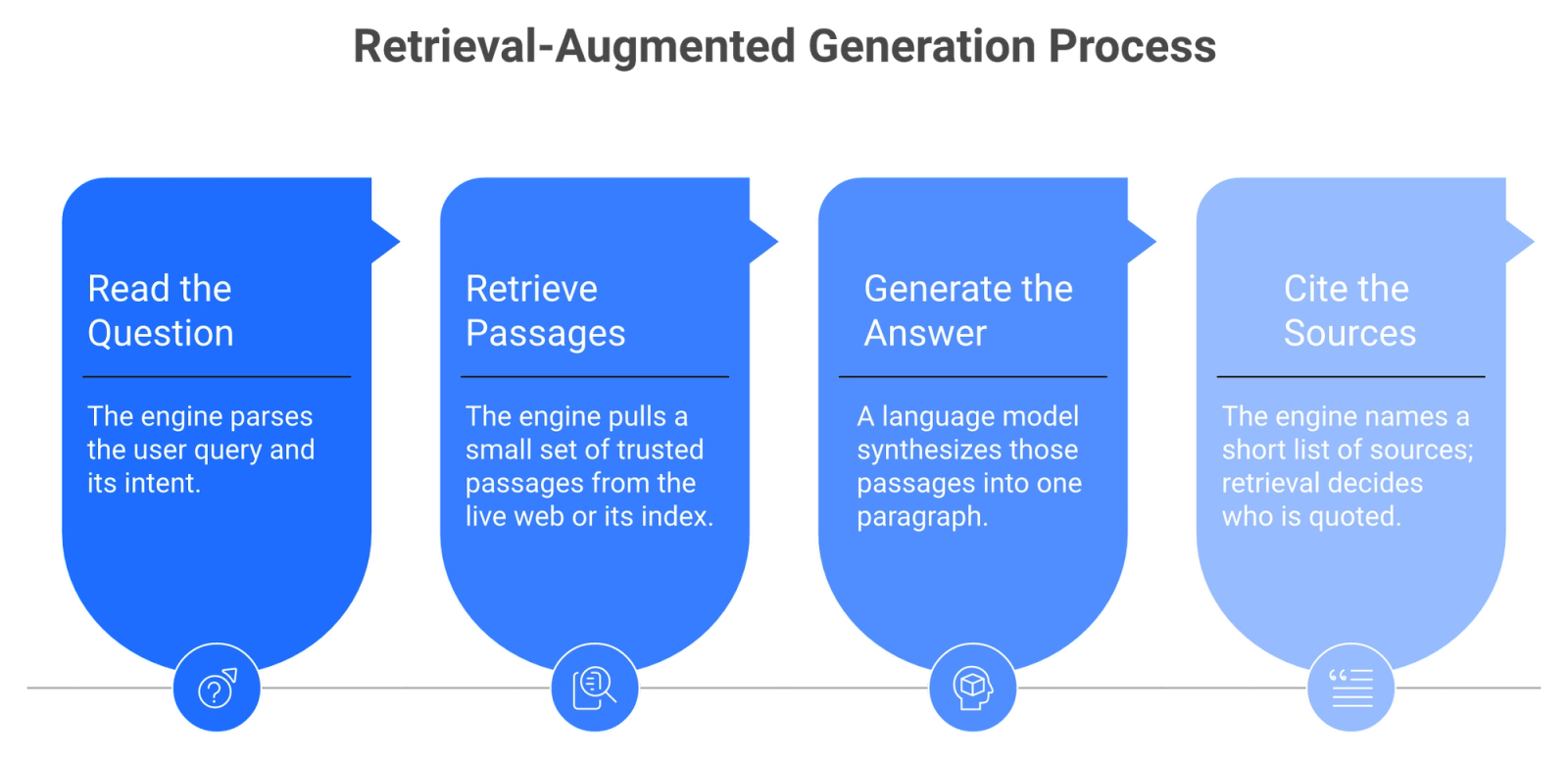
Answer Engine Optimization is the practice of structuring your content and digital presence so that AI-powered platforms - ChatGPT, Perplexity AI, Google Gemini, Microsoft Copilot, Claude - cite your brand as a trusted source when generating direct responses to user questions.

💡 Beyond the Basic Definition

But let me be honest about what this really means, because the textbook definition doesn't capture the magnitude of this shift.

In the traditional SEO world, you optimized to appear in a list. You competed for position one, two, or three in a set of ten results. The user still had to click, read, evaluate, and decide. You had multiple opportunities to capture attention even if you weren't the top result.

In the answer engine world, there's often only one answer. Or maybe three sources cited. If you're not one of them, you don't exist in that moment of discovery.

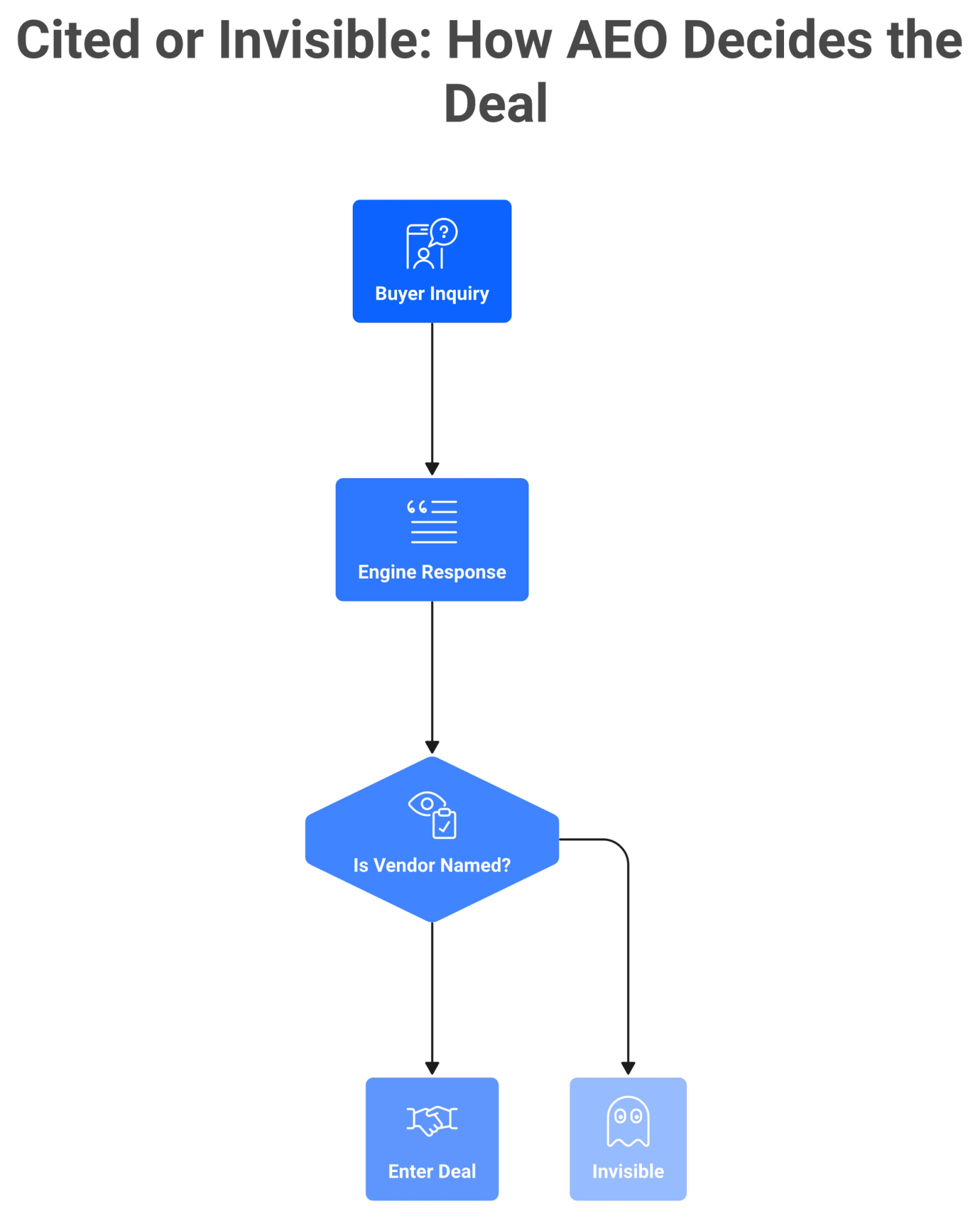
"If you're not present in the AI's answer, you're not visible to the client, and hence you're not even part of the evaluation set."

I've seen this play out repeatedly since we started working with clients on AEO at MaximusLabs. The evaluation set has shrunk dramatically. When a procurement manager asks ChatGPT, "What are the best CRMs for mid-market SaaS companies?" - only the solutions mentioned in that response get evaluated. There might be 100 CRMs in the market. Only 10 get named. Only those 10 exist in that buyer's reality.

[INSERT IMAGE HERE: Image 1 - The Paradigm Shift: List-Based Search vs. Answer-First AI]

⚠️ Why This Shift Is More Fundamental Than Previous Changes

I might be wrong here, but my current thinking is that this shift is more fundamental than the mobile-first transition or even the social media revolution. Here's why: those previous shifts changed where buyers looked for information. This shift changes how buyers process information.

They're not processing anymore. They're delegating that processing to AI.

And AI, in turn, is looking for signals of trustworthiness to decide which sources to reference. This is why at MaximusLabs, we've built our entire approach around what I call "Trust-First AEO" - where everything we write is backed by data, structured for clarity, and designed to make our clients the authoritative resource that AI can confidently cite. You can explore our AEO implementation checklist to see what this looks like in practice.

🎯 The Platforms That Matter for B2B

Answer Engine Platforms and B2B Relevance
PlatformPrimary Use CaseB2B Relevance
ChatGPTGeneral research, deep analysis⭐⭐⭐⭐⭐ Highest
Perplexity AIReal-time research with citations⭐⭐⭐⭐⭐ Highest
Google GeminiIntegrated search + AI⭐⭐⭐⭐ High
Microsoft CopilotEnterprise workflows⭐⭐⭐⭐ High
ClaudeLong-form analysis⭐⭐⭐ Moderate

Each of these platforms has become a research assistant for B2B buyers. And each one is looking for the same thing: trusted sources it can reference with confidence. Understanding how to track your visibility across these platforms is essential for any serious AEO effort.

How is Answer Engine Optimization Different from SEO? [toc=AEO vs SEO]

The short answer: SEO optimizes for visibility in a list. AEO optimizes for becoming the answer.

But the differences run much deeper than that, and understanding them is critical for making smart resource allocation decisions. I've written a detailed breakdown of AEO vs SEO differences, but let me share the key insights here.

🔑 The Fundamental Goal Difference

In traditional SEO, success meant ranking high enough to earn a click. You could rank #5 and still capture meaningful traffic. The game was about improving your position incrementally and capturing your share of clicks across the entire SERP.

In AEO, success means being cited as a source in an AI-generated response. There's no "ranking #5" equivalent. You're either referenced or you're not. You're either part of the answer or invisible.

💡 How AI "Reads" Differently Than Google Crawlers

Here's something I've experimented with extensively: AI engines don't just match keywords - they understand positioning.

This is where it gets interesting for B2B companies. Previously, Google operated primarily on keywords. If you wanted to rank for "CRM for SaaS industry," you optimized for those specific keywords and their variations.

But AI understands context and positioning at a deeper level. If you've consistently positioned your product as "the CRM built specifically for product-led growth companies," and someone asks about the best CRM for PLG - AI will connect those dots even if your exact keyword targeting was different.

"Positioning matters more now than it ever has. AI understands positioning in a way that keyword-based algorithms never could."

[INSERT IMAGE HERE: Image 2 - AEO vs SEO: Key Differences for B2B Companies]

📊 The Comparison That Matters for B2B

SEO vs AEO: Critical Differences for B2B Companies
DimensionTraditional SEOAnswer Engine OptimizationB2B Implication
Primary GoalRank in top positionsBecome the cited sourceBuyers trust AI recommendations over search rankings
Success MetricClick-through rate, rankingsCitation frequency, mentionsNew tracking tools required for measurement
Content ApproachComprehensive keyword coverageDirect, authoritative answersAnswer buyer questions directly, not exhaustively
Competition10 organic positionsOften 1-3 cited sourcesWinner-take-most dynamics favor early movers
User ActionClick to websiteReceive answer directlyBrand awareness builds before site visit
Algorithm FocusLinks, keywords, technical SEOTrust signals, clarity, accuracyE-E-A-T and authority matter more than ever

For a deeper dive into the technical differences, explore our GEO vs traditional SEO comparison.

✅ They're Complementary, Not Competing

I should be clear about something: I don't believe AEO replaces SEO. My view is that they're increasingly complementary strategies serving different moments in the buyer journey.

Strong SEO foundations - site architecture, page speed, structured data, quality backlinks - still matter for AEO. AI engines often pull from sources that have established authority through traditional SEO signals. The difference is in how you structure and present information once you've established that foundation.

What I've observed is that companies with strong SEO fundamentals have a head start in AEO. But SEO alone is no longer sufficient. You need to explicitly optimize for how AI consumes and references your content. Our guide on E-E-A-T for AEO explains how authority signals translate across both disciplines.

Why Does Answer Engine Optimization Matter Specifically for B2B Companies? [toc=Why B2B Needs AEO]

This is where I get genuinely excited, because B2B is where AEO has the most transformative potential.

🔑 The Buyer Behavior Shift Is Real

Let me share what I'm seeing in practice. B2B buyers today conduct extensive research before ever filling out a contact form. I went to a G2 event recently where G2 and their partners at Sixth Sense shared a statistic that's been stuck in my head ever since:

"70% of the buyer journey is over by the time they come and fill the contact form."

Seventy percent. That means by the time a prospect reaches out to your sales team, they've already formed most of their opinions, shortlisted their options, and likely decided on their top choice. The question is: where is that 70% of the journey happening?

Increasingly, it's happening in answer engines.

💡 The New Evaluation Process

Here's the behavior pattern I've observed repeatedly:

  1. Buyer identifies a problem or need
  2. Buyer goes to ChatGPT or Perplexity and asks: "I'm a [role] at a [company type] looking for [solution type]. What are the best options for my situation?"
  3. AI provides a list of 5-10 solutions with context
  4. Buyer asks follow-up questions: "Between these, which is best for [specific requirement]?"
  5. AI narrows down recommendations
  6. Only then does the buyer visit websites, request demos, or fill contact forms

If you're not in that initial AI response, you're not in the consideration set. Period.

[INSERT IMAGE HERE: Image 3 - The New B2B Buyer Journey: Where AI Search Fits]

📊 The Oliv AI Example

I'll share a real example from our work. With Oliv AI, one of our first clients, we started focused AEO work in June 2025. What we observed was remarkable: the number of leads they started getting from answer engines kept increasing month over month.

But here's the insight that really matters: almost all the people who signed up through ChatGPT and Perplexity were inbound leads. They came pre-educated, pre-convinced, and with significantly higher intent. The conversion rate was substantially higher than traditional organic traffic.

This makes sense when you think about it. When AI tells a buyer "this solution is well-suited for your specific situation," that's a powerful endorsement. It's like having an objective third party make the recommendation. We've documented more examples like this in our AEO case studies collection.

🎯 Why B2B Is Uniquely Positioned to Benefit

B2B buyers ask complex, multi-layered questions. They don't just ask "what's the best CRM" - they ask:

  • "What's the best CRM for a 50-person SaaS company with a product-led growth motion?"
  • "Between Salesforce and HubSpot, which integrates better with our existing tech stack?"
  • "What CRM has the best analytics for tracking enterprise sales cycles?"

These nuanced queries play to AI's strengths. And they create opportunities for well-positioned B2B companies to shine. Our B2B SaaS AEO strategies guide dives deeper into how to capture these complex queries.

"The deeper you are in answer engine optimization, the better AI will recommend you for these multi-layered questions. Ultimately, AI will tell the buyer that your solution is the best - and AI will bring the buyer to you."

🚀 The 1000 BDR Analogy

Here's how I think about the opportunity:

"By doing answer engine optimization, we have the biggest opportunity that has ever existed - making all of these answer engines our business development representative. It's like hiring 1000 sales development representatives who go and pitch your solution to the world for free."

When ChatGPT tells a buyer that your solution is ideal for their situation, that's essentially a personalized sales pitch delivered at the exact moment of intent. No cold outreach. No advertising cost. Just trusted recommendations at scale.

How Do You Implement Answer Engine Optimization for B2B Content? [toc=AEO Implementation]

Let me share the practical implementation approach we've developed at MaximusLabs through extensive experimentation.

🔑 Start With Deep Positioning Work

Before you write a single word of content, you need absolute clarity on your positioning. This is why we sit with founders at MaximusLabs - you can't position what you don't deeply understand.

Traditional SEO let you get away with surface-level positioning. You could rank for keywords without truly understanding your differentiation. AEO is different. AI understands positioning at a conceptual level, and it references sources that have clear, consistent positioning.

Questions to answer before creating AEO content:

  • What specific problem do you solve better than anyone else?
  • For whom specifically are you the obvious choice?
  • What would a satisfied customer say makes you different?
  • How do you want AI to describe you when asked about your category?

For SaaS companies specifically, our GEO for SaaS startups guide provides a detailed framework for this positioning work.

💡 Structure Content for AI Consumption

AI engines extract information differently than humans scan webpages. Here's what I've found works:

The Answer-First Structure:
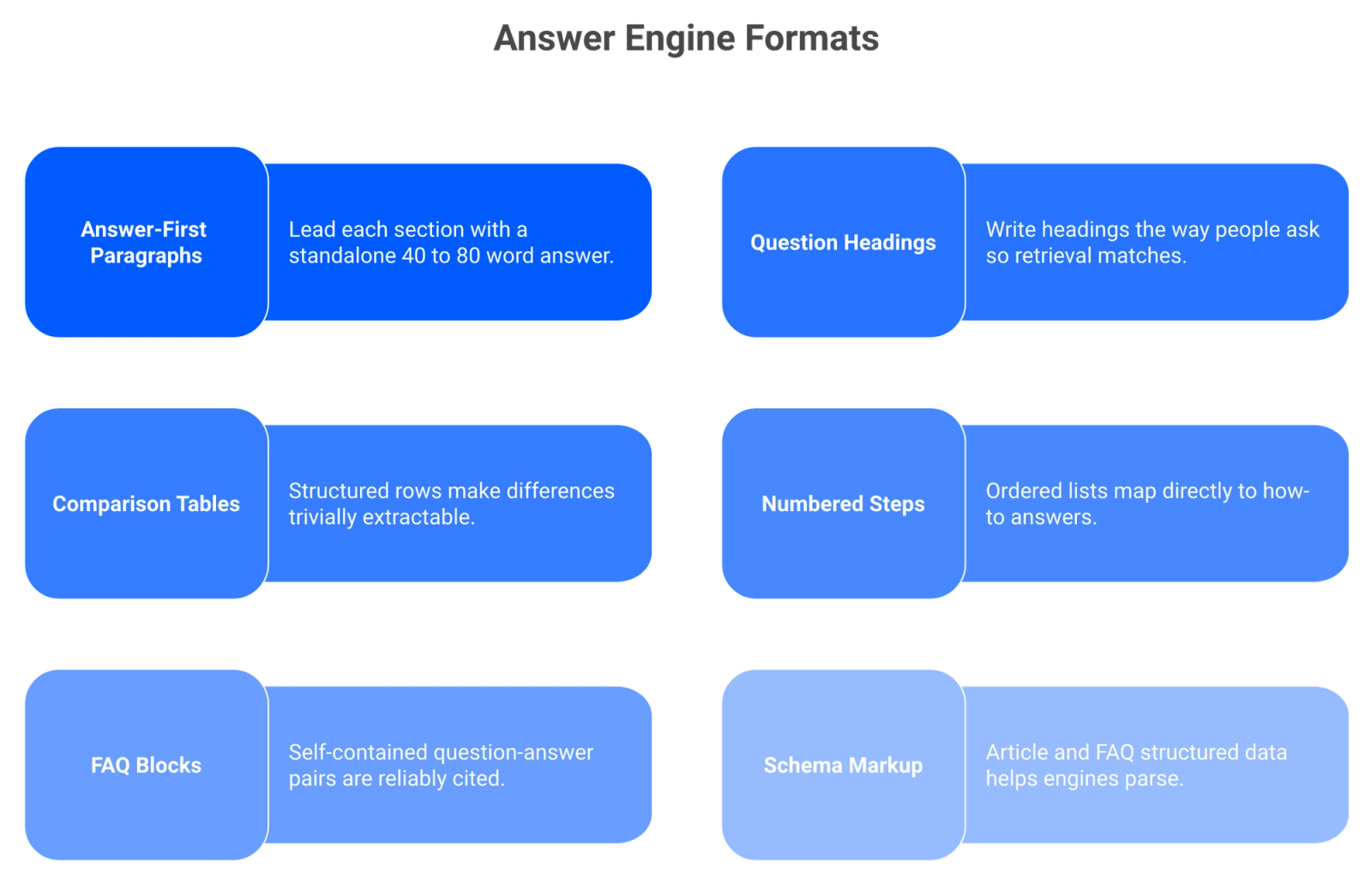
Every page should lead with a direct, clear answer to the primary question it addresses. Don't bury the answer in paragraph three - put it in the first two sentences.

Schema Markup Is Non-Negotiable:
Implement structured data throughout your content:

  • ✅ FAQPage schema for Q&A content
  • ✅ HowTo schema for process content
  • ✅ Article schema for thought leadership
  • ✅ Organization schema for company information

Our schema markup basics guide walks through implementation step-by-step.

Create Question-Answer Pairs:
Structure content around the actual questions your buyers ask. Use those questions as headers. Provide direct answers immediately beneath. Our AEO keyword and question research guide shows you how to identify these questions systematically.

[INSERT IMAGE HERE: Image 4 - The Trust-First AEO Framework]

📊 The Trust Signals That Matter

Here's what I genuinely believe after months of testing: AI engines prioritize sources that demonstrate trustworthiness through:

  1. Specificity over generality - Specific data, specific examples, specific claims
  2. Clarity over comprehensiveness - Clear, direct answers over walls of text
  3. Consistency across sources - Your positioning should be consistent everywhere AI might find you
  4. Third-party validation - Mentions, citations, and references from other trusted sources
  5. Freshness and accuracy - Up-to-date information that can be verified

🎯 The Content Types That Get Cited

Based on our experience, these formats perform best for AEO:

Content Formats and AEO Effectiveness
Content TypeAEO EffectivenessWhy It Works
Comparison pages⭐⭐⭐⭐⭐Direct answers to evaluation questions
How-to guides⭐⭐⭐⭐⭐Structured, extractable steps
Definition pages⭐⭐⭐⭐Clear answers to "what is" queries
Use case pages⭐⭐⭐⭐Specific positioning for buyer contexts
FAQ pages⭐⭐⭐⭐Multiple Q&A pairs for AI to reference

For a comprehensive look at content optimization, explore our GEO content optimization guide.

⏰ Your First Week: Concrete Action Items

If you're starting from zero, here's what I'd prioritize in your first week:

  1. Day 1-2: Audit your top 10 pages for answer-first structure. Do they answer the core question in the first 50 words?
  2. Day 3: Implement FAQPage schema on your most important Q&A content
  3. Day 4: Run your top queries through ChatGPT and Perplexity. Are you mentioned? In what context?
  4. Day 5: Identify 5 comparison queries where you should be cited but aren't. These are your content priorities.

🔑 Build Your Topic Authority Systematically

AI doesn't just evaluate individual pages - it assesses your overall authority on a topic. This means you need depth across related subjects, not just one well-optimized page.

If you want to be cited for "CRM for SaaS companies," you should also have authoritative content on:

  • CRM implementation best practices
  • CRM integration guides
  • CRM comparison content
  • CRM use case deep-dives
  • Customer success stories with CRM impact

This interconnected content web signals to AI that you're a comprehensive authority on the topic. Our guide on GEO topic clusters explains how to build this systematically.

How Do You Measure and Track AEO Performance? [toc=AEO Measurement]

Let me be candid: measurement is the hardest part of AEO right now. The tools are immature, the data is imperfect, and there's no equivalent to Google Search Console for answer engines.

But that doesn't mean you can't measure. It means you have to be more creative and accept some imprecision. I've covered this in depth in our AEO measurement metrics guide.

📊 The Metrics That Matter

Primary Metrics:

  • Citation frequency - How often is your brand mentioned in AI responses to relevant queries?
  • Citation context - How are you being positioned when mentioned? (Positive, neutral, comparative)
  • Answer engine traffic - Direct referrals from ChatGPT, Perplexity, and other AI platforms

Secondary Metrics:

  • Brand mention trends - Are AI mentions of your brand increasing over time?
  • Competitive visibility - How do your citations compare to competitors?
  • Query coverage - What percentage of relevant queries include your brand in responses?

[INSERT IMAGE HERE: Image 5 - AEO Performance Dashboard: Key Metrics to Track]

🎯 The Tools Available

The AEO tracking tool ecosystem is evolving rapidly. Here's what's available as of early 2026:

AEO Tracking Tools Comparison
ToolPrimary FunctionBest For
AIclicksAI search visibility trackingComprehensive monitoring
Peec AICitation tracking across platformsBrand mention analysis
ProfoundAI answer monitoringCompetitive intelligence
Ahrefs Brand RadarBrand mention trackingSEO-integrated monitoring
SE RankingAI visibility featuresCombined SEO/AEO tracking

For detailed comparisons, see our guides on Peec AI alternatives, Profound alternatives, and our comprehensive AEO tools comparison.

💡 Our Practical Approach

At MaximusLabs, we combine automated tracking with manual monitoring. Here's what we do:

  1. Regular query testing - We run target queries through ChatGPT, Perplexity, and Gemini weekly to check citation status
  2. Traffic source analysis - We track referrals from AI platforms in analytics
  3. Conversion attribution - We ask new leads how they found us and track mentions of AI research
  4. Competitive benchmarking - We compare our citation frequency to competitors monthly

⚠️ The Attribution Challenge

I should be honest about a limitation: attributing revenue to AEO is harder than attributing to traditional channels. A buyer might research on ChatGPT, validate on your website, and convert through a direct visit two weeks later. The AI touchpoint often doesn't show up in standard attribution.

Practical workaround: Add this question to your lead forms and discovery calls: "How did you first hear about us?" Track mentions of ChatGPT, Perplexity, or "AI search" as a separate category. It's not perfect, but it gives you directional signal.

This is why we focus on revenue outcomes rather than channel attribution. We look at overall pipeline growth, lead quality improvements, and conversion rate changes across the funnel. If those metrics improve as AEO efforts increase, we have directional evidence of impact even without perfect attribution. Learn more about calculating ROI for these initiatives.

What I'm Thinking About Going Forward [toc=Future Outlook]

The shift to answer engines isn't slowing down. Deep research capabilities - where AI platforms conduct comprehensive analysis on any topic - are making it easier than ever for buyers to conduct thorough evaluations without human assistance.

My prediction: within two years, the majority of B2B software evaluations will begin in answer engines rather than traditional search. The companies that establish trust and authority now will have compounding advantages as this shift accelerates. We track these developments closely in our future trends in GEO analysis.

What I'm most focused on at MaximusLabs is helping B2B companies make this transition thoughtfully - not chasing every AI platform frantically, but building genuine authority that AI engines want to reference because it helps them give better answers.

"Stop optimizing for algorithms. Start optimizing for trust."

If you're thinking about AEO for your B2B company, here's my honest advice: start with positioning clarity, build content depth systematically, and measure what you can while accepting imprecision. The companies that figure this out early will have 1000 AI-powered sales reps working for them around the clock.

That's an opportunity worth taking seriously.

[INSERT IMAGE HERE: Image 6 - The AEO Opportunity Window: Why Timing Matters]

Frequently Asked Questions [toc=FAQ]

Is AEO replacing SEO entirely?

No - they're complementary. Strong SEO fundamentals support AEO success, but AEO requires additional optimization for how AI consumes and references content. I think of them as parallel strategies serving different discovery moments. For a detailed breakdown, see our AEO vs SEO comparison.

How long does it take to see AEO results?

Based on our experience, you can start seeing citation improvements within 60-90 days of focused optimization. However, building comprehensive authority takes 6-12 months of consistent effort. This isn't a quick fix - it's a strategic investment. Companies that want to accelerate this timeline often work with specialized AEO agencies.

What's the minimum investment to start with AEO?

You can begin with existing content optimization - restructuring what you have for better AI consumption. However, meaningful results typically require dedicated content creation, technical implementation, and ongoing monitoring. Budget accordingly for a 6-month minimum commitment.

Which AI platform is most important for B2B?

Currently, ChatGPT and Perplexity have the highest B2B usage for research queries. Google Gemini is increasingly important as AI Overviews become standard. I'd prioritize these three, but monitor all major platforms for your specific queries. Our AI search visibility tracking tools guide can help you set up monitoring across platforms.

What are the biggest AEO implementation challenges?

The three challenges I see most often: attribution difficulty (tracking where AI-influenced leads come from), content restructuring at scale (making existing content answer-first), and maintaining consistency across all touchpoints AI might reference. Our AEO challenges guide addresses each of these in detail.

Krishna Kaanth

I’m KK >> Over the years, I’ve experimented and built systems that drive growth through AEO & GEO. Today,

I help brands turn AI search into revenue engines, not vanity metrics - delivering AI visibility and getting brands cited and chosen across ChatGPT, Perplexity & Google, where real buying decisions happen. Let’s talk.

Book a 15 min Chat

Frequently asked questions

Everything you need to know about the product and billing.

How is Answer Engine Optimization different from traditional SEO?

We've identified a fundamental divergence between traditional SEO and AEO that goes far beyond tactical differences.

Traditional SEO optimizes for click-based traffic - your goal is to rank #1, maximize click-through rate, drive visitors to your site, and convert them there. Success is measured by keyword rankings, organic traffic volume, and domain authority.

AEO optimizes for mention-based authority - your goal is to become the cited answer AI platforms reference directly, often in zero-click scenarios. Success is measured by share of voice across AI platforms, citation frequency, and the 6x higher conversion rates LLM-sourced traffic delivers.

The data proves these require different strategies: For commercial queries, overlap between ChatGPT's top-cited sites and Google's organic results is only 8%, with a negative correlation (r ≈ -0.98). This means the more ChatGPT favors a URL, the less likely Google is to rank it.

We approach this through our Search Everywhere Optimization (SEO²) framework, which integrates traditional technical SEO foundations while layering AEO-specific tactics: schema implementation, Q&A content reformatting, citation mapping, and UGC platform strategy. This hybrid methodology ensures you rank in Google organic results AND get cited by ChatGPT, Perplexity, and Google AI Overviews simultaneously.

What platforms require Answer Engine Optimization?

We optimize for eight primary AI answer engine platforms, each with distinct ranking algorithms and citation preferences:

AI Chatbots & Search:

  • ChatGPT (400M weekly users) - Prioritizes Reddit/UGC citations 2.3x more than other platforms
  • Perplexity AI - Emphasizes recency signals and real-time information
  • Claude (Anthropic) - Values depth of analysis over brevity
  • Gemini (Google) - Integrates with Google Knowledge Graph
  • Bing Copilot - Powered by GPT-4, uses Bing's search index

Voice Assistants:

  • Google Assistant - Powers Android and smart home voice queries
  • Siri (Apple) - iOS ecosystem integration
  • Alexa (Amazon) - E-commerce and smart home queries

Google AI Features:

  • Google AI Overviews (formerly SGE) - Favors schema-rich sites 4.1x more than competitors

Each platform requires platform-specific optimization. For example, we've found through testing 10,000+ queries that ChatGPT heavily weights conversational, Reddit-style language, while Google AI Overviews prioritize comprehensive schema markup and structured data.

Our multimodal GEO approach ensures your content is optimized for text, voice, and visual search across all these platforms simultaneously.

How do you measure ROI for Answer Engine Optimization?

The most damaging mistake we see is treating AEO as an "add-on" to traditional SEO rather than recognizing it requires fundamentally different strategies for head vs. tail questions.

The One-Size-Fits-All Trap:
Most agencies apply identical tactics to all queries, wasting resources creating product pages for high-volume head terms (e.g., "best CRM software") when media sites, Reddit threads, and G2 comparison pages dominate those citations. Your product site will almost never appear as a direct answer for head questions.

The Correct Approach:
We segment questions into two strategic buckets:

Head Questions (Earned AEO): For broad queries, we execute citation optimization - identifying the specific Reddit threads, Quora answers, and G2 pages AI platforms repeatedly cite, then strategically getting your brand mentioned in those sources through authentic community engagement.

Tail Questions (Owned AEO): For specific, high-intent questions, we build comprehensive help center content answering every follow-up question on a single page. AI conversations are inherently long-tail because LLMs save context - a user asking "What's the best CRM?" will ask 5-10 follow-ups about features, integrations, and pricing.

Other Critical Mistakes:

  • Blocking AI crawlers (GPTBot, PerplexityBot) in robots.txt
  • Using fully automated AI-generated content lacking E-E-A-T signals
  • Hosting help centers on subdomains instead of subdirectories
  • Ignoring UGC platforms (Reddit appearing 5x in ChatGPT citations)

Our GEO strategy framework systematically addresses each of these pitfalls.

What is the biggest mistake companies make with Answer Engine Optimization?

The most damaging mistake we see is treating AEO as an "add-on" to traditional SEO rather than recognizing it requires fundamentally different strategies for head vs. tail questions.

The One-Size-Fits-All Trap:
Most agencies apply identical tactics to all queries, wasting resources creating product pages for high-volume head terms (e.g., "best CRM software") when media sites, Reddit threads, and G2 comparison pages dominate those citations. Your product site will almost never appear as a direct answer for head questions.

The Correct Approach:
We segment questions into two strategic buckets:

Head Questions (Earned AEO): For broad queries, we execute citation optimization - identifying the specific Reddit threads, Quora answers, and G2 pages AI platforms repeatedly cite, then strategically getting your brand mentioned in those sources through authentic community engagement.

Tail Questions (Owned AEO): For specific, high-intent questions, we build comprehensive help center content answering every follow-up question on a single page. AI conversations are inherently long-tail because LLMs save context - a user asking "What's the best CRM?" will ask 5-10 follow-ups about features, integrations, and pricing.

Other Critical Mistakes:

  • Blocking AI crawlers (GPTBot, PerplexityBot) in robots.txt
  • Using fully automated AI-generated content lacking E-E-A-T signals
  • Hosting help centers on subdomains instead of subdirectories
  • Ignoring UGC platforms (Reddit appearing 5x in ChatGPT citations)

Our GEO strategy framework systematically addresses each of these pitfalls.

How long does it take to see results from Answer Engine Optimization?

We've found AEO delivers measurably faster results than traditional SEO, with different timelines for Earned vs. Owned strategies.

Earned AEO (Citation Optimization): 3-6 Months
Early-stage startups lacking domain authority can achieve meaningful AI visibility in 3-6 months through strategic citation optimization on Reddit, G2, and Quora. This bypasses the 12-18 months traditional SEO requires to build authority through backlinks alone.

Our clients average 43% increase in AI platform mentions within the first 6 months, with Reddit engagement driving 40% of new citations for B2B SaaS companies.

Owned AEO (Help Center Optimization): 2-4 Months
Technical implementation (schema markup, subdirectory migration, content reformatting) shows initial citation improvements in 60-90 days as AI crawlers re-index optimized content.

Quick Wins Timeline:

  • FAQ schema implementation: 30-60 days for 15-25% citation lift
  • Help center subdirectory migration: 60-90 days for 30-40% increase
  • G2 profile optimization: 30-60 days for 20-30% B2B citation increase

Stage-Based Expectations:

  • Early-Stage (Seed/Series A): Focus 70% on Earned AEO for fastest wins
  • Mid-Stage (Series B/C): Split 50/50 between Earned and Owned
  • Late-Stage/Enterprise: 6-9 months for comprehensive coverage

The opportunity window is closing - with only 23% of B2B companies implementing AEO (per our 2025 survey), first-movers gain compounding citation advantages that late adopters struggle to overcome.

Our startup-focused GEO approach accelerates these timelines through systematic execution across all eight pillars simultaneously.